Wednesday, February 17, 2016

Answer 2

1.  What is your EQ?
How has the history of law enforcement shaped the current policies?

2.  What is your first answer? (In complete thesis statement format)
The history of law enforcement has shaped its current policies for women in law enforcement.

3.  What is your second answer? (In complete thesis statement format)
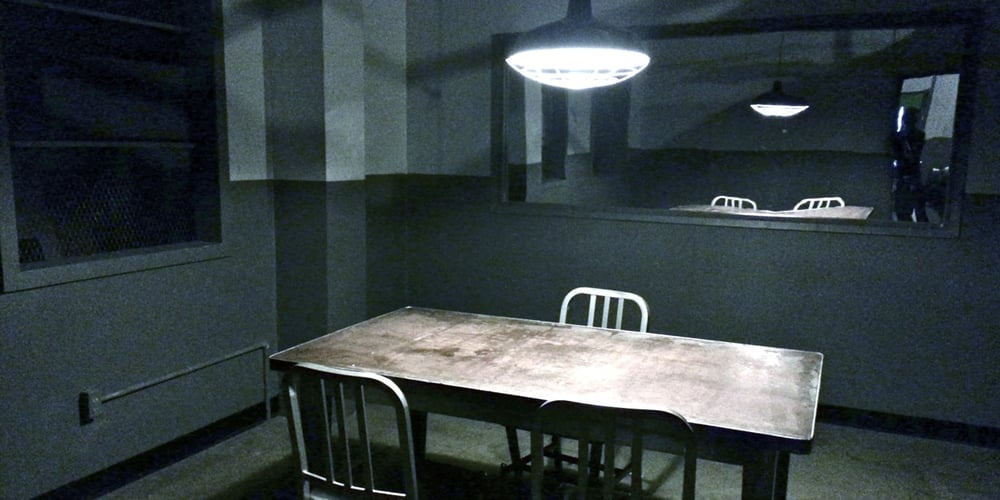
The history of law enforcement has shaped its current policies for interrogation techniques.

4.  List three reasons your answer is true with a real-world application for each.
  1. Training: Law Enforcement employees are taught these tactics in their training.
  2. Media: Many people assume that the tactics they see on television are the ones law enforcement actually uses
  3. Real Life: These are actual tactics used and there were many more that did not work.
5.  What printed source best supports your answer?
"4 Police Interrogation Techniques You Should Know (And Why Not All of Them Work)" ForensicOutreach, Forensic Outreach. N.d. Web. December 10, 2015. 
http://forensicoutreach.com/4-police-interrogation-techniques-you-should-know-and-why-not-all-of-them-work/

6.  What other source supports your answer?
Meyer, Pamela. LIESPOTTING: Proven Techniques to Detect Deception. New York: St. Martian's Griffin. 2010. Print.
Barber, Nigel. "Do Lie Detectors Work?" PsychologyToday, Sussex Publishers, LLC. May 7, 2013. Web. January 7, 2013. 
https://www.psychologytoday.com/blog/the-human-beast/201303/do-lie-detectors-work

7.  Tie this together with a  concluding thought.
Learning about the things and techniques law enforcement actually uses is a interesting way to show how law enforcement has grown.
Wednesday, February 10, 2016

Independent Component 2 Approval

1.  Describe in detail what you plan to do for your 30 hours.
I at the current moment have no idea what I going to plan to do with my second Independent Component and would like to discuss it would my house and advisory house teacher before deciding what I will do.

2.  Discuss how or what you will do to meet the expectation of showing 30 hours of evidence.

I will probably do something similar to what I did for my first Independent Component where I made a powerpoint and put pictures and links to papers I wrote for the component.


3.  Explain how this component will help you explore your topic in more depth.

At the current moment I have no idea.


4.  Post a log in your Senior Project Hours link and label it "Independent Component 2" log.

Thursday, February 4, 2016

Independent Component 1

  • LITERAL
    (a) Write: “I, Brooke N Cooper, affirm that I completed my independent component which represents 31 hours of work.”

    (b) Cite your source regarding who or what article or book helped you complete the independent component.
    "
    Writing a Police Report Narrative." Ohio Literacy Resource Center, Kent State University. N.d. Web. 12 November 2015. "13 Ways to Make Fake Blood." WikiHow, Wikipedia. N.d. Web. 18 October 2015.

    (c) Update your hours in your Senior Project Hours link. Make sure it is clearly labeled with hours for individual sessions as well as total hours.
    Hours log here

    (d) Explain what you completed.
       
    I recreated the investigation that was described in the information for the Mock Trial we did for Rivas's class.
  • INTERPRETIVE 
    Defend your work and explain its significance to your project and how it demonstrates 30 hours of work.   Provide evidence (photos, transcript, art work, videos, etc) of the 30 hours of work. 
    I recreated on of the scenes described in the information given to me in the packet for the investigation. I took pictures then chose three that would show what was described. I found a document that had a search warrant that you fill out and made it a PDF to fill out on the computer and filled it out on the computer. Then I rewrote 3 reports that were described in the information and did a debrief on them. Here is the PowerPoint I made that shows all of this. (All of the reports and the debrief are on the PowerPoint.)
  • APPLIED
    How did the component help you understand the foundation of your topic better?  Please include specific examples to illustrate this.
    It made me really take a look into how the investigations and the reports that most people in law enforcement have to write and have they have to be very detailed and how much work it actually takes.
 
 
 IMG_1849.JPG

Monday, February 1, 2016

Lesson 2 Reflection

1.What are you most proud of in your Lesson 2 Presentation and why?
I'm really proud of the energy that I kept throughout the presentation, I felt that my hook was well thought-out and my activity was well done.

2. a.     What assessment would you give yourself on your Lesson 2 Presentation (self-assessment)?
       AE       P          AP       CR       NC

     b.     Explain why you deserve that grade using evidence from the Lesson 2 component contract.I felt that I did what was required of me and I did it to the best of my ability.

3. What worked for you in your Lesson 2?
The powerpoint helped keep my on track, I felt that my activity was received well and helped them understand a bit about my answer.

4. What didn't work? If you had a time machine, what would you have done differently to improve your Lesson 2?
I would try and have a bit more content.

5. What do you think your answer #2 is going to be?
I might do something about emergency responses and active shooters.

Wednesday, January 13, 2016

Third Interview Preparation

1.  Who do you plan to interview?  What is this person's area of expertise?
I plan to interview a female officer with the LAPD, Officer Choice. She works for the LAPD.

2.  Verify that you have called your interviewee to schedule an interview.  What is the date and time of the interview?
N/A as of right now.

3.  Phrase an open-ended question that will help you find research resources that would help to answer the EQ.
Did you learn of large changes in policies in the LAPD while training? If so what were they?

4.  Phrase an open-ended question that will help you think about other useful activities you might do to help you answer the EQ (IC2, possible experts to talk to, etc).
How do you suggest I get a closer look at how things have changed and law enforcement?

5.  Phrase two open-ended questions that help you to understand your interviewee's perspective on an aspect of your EQ
What do you think of my EQ?
Do you think it is a good perspective to look at the history?

Thursday, January 7, 2016

Blog 13: 10 Hour Mentorship Check-In

1.   Where are you doing your mentorship?
I currently doing my mentorship at the Walnut Sheriff Station.
2.   Who is your contact?  What makes this person an expert?
My contact is Deputy Daley and he is my primary mentor however this does not mean he is my only mentor. He is a Deputy at the Sheriffs station and has a background in law enforcement. 
3.   How many  hours have you done during the school year? (Summer Mentorship Hours and Mentorship Hours should be reflected separately in your Senior Project Hours log located on the right hand side of your blog).
I have done 2 ridealongs which are both 8 hours to that adds up to 16 hours.
4.   Succinctly summarize what you did, how well you and your mentor worked together, and how you plan to complete the remaining hours.
During ridealongs what I can do is very limited, I mainly just observe and listen to what my mentor has to say to me. We do work well together and are able to talk. I plan on continuing to do my hours with ridealongs because it is a genuine learning experience.


Monday, January 4, 2016

Blog 12: Holiday Project Update

1.  It is important to consistently work on your senior project, whether it is break or we are in school.  What did you do over the break with your senior project?I worked a bit on my Independent component over break.

2.  What was the most important thing you learned from what you did, and why?  What was the source of what you learned?

I learned that certain interrogative techniques that we've been so use to seeing on popular TV shows actually don't work when interrogating people. I also learned that lie detectors have no scientific backing and actually do not work but are more of "theater show" to scare criminals. I learned this from an interrogation teacher from Faulkner University, Lou Harris and an article from Psychology Today "Do Lie Detectors Work?" by Nigel Barber, Ph.D.

3.  Your third interview will be a 10 question interview related to possible answers for your EQ. Who do you plan to talk to and why?

I plan to talk to the officer about their experience working in law enforcement and their opinions on certain events that are relevant to law enforcement today. I'm also gonna talk about to them about different protocols that have changed from when they started in law enforcement.